How to remove a Tree Stump Safely and Effectively from Your Garden
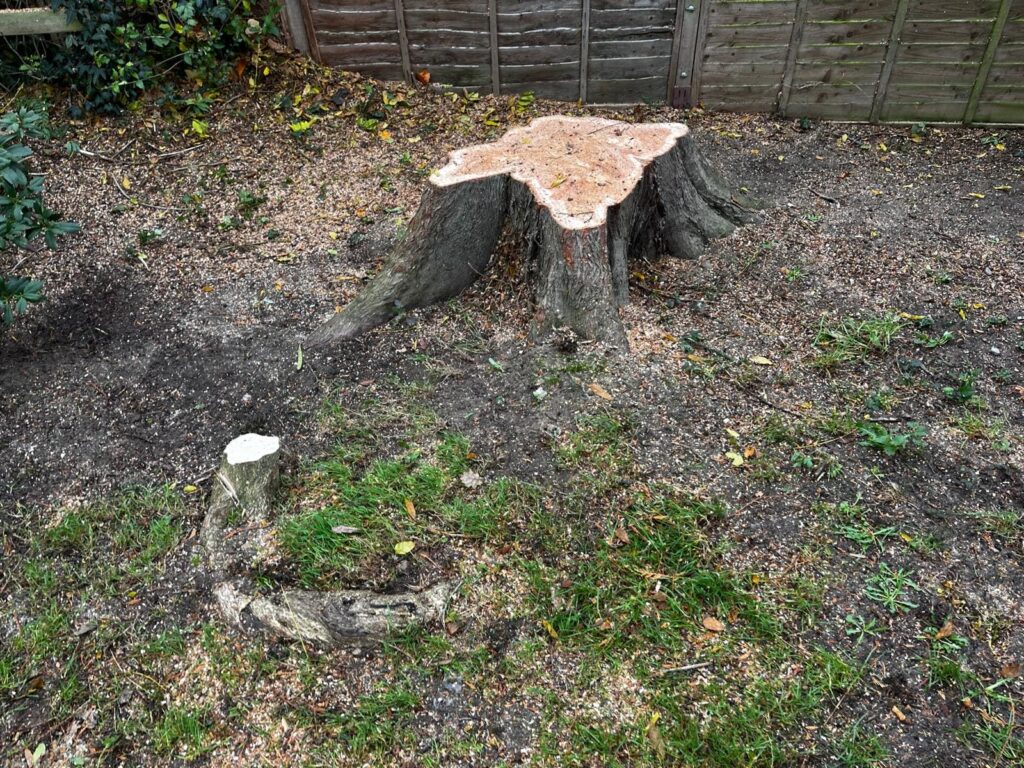
After a tree has been felled, the remaining stump can quickly become an unwanted obstacle. Homeowners researching How to remove a Tree Stump often discover that the best method depends on its size, species, age and location. A small, decaying stump may be manageable with hand tools, while a large established stump with extensive roots can require specialist machinery. Choosing the right approach helps protect surrounding paving, lawns, fences, underground services and nearby plants.
How to remove a Tree Stump by digging it out
Manual removal is one option for smaller stumps. The process involves digging around the base to expose the main roots, cutting those roots and gradually loosening the stump from the soil. Tools may include a strong spade, mattock, pruning saw and suitable cutting equipment. The wider and deeper the root system, the more labour-intensive the job becomes.
Before digging, consider what may be hidden beneath the ground. Drainage pipes, electrical cables, irrigation systems and other services can sit close to trees, particularly in established gardens. Trying to pull a stubborn stump out with unsuitable equipment can also damage surrounding surfaces or create a serious safety risk.
Manual digging tends to suit young trees and relatively narrow trunks. Mature specimens can have substantial structural roots extending well beyond the visible stump. In those cases, repeated digging and cutting may cause unnecessary disruption without achieving a clean result.
How to remove a Tree Stump with stump grinding
Stump grinding is one of the most practical options for many residential and commercial properties. A specialist machine uses a rotating cutting wheel to reduce the stump into small wood chips, working below the surrounding ground level. This removes the prominent obstruction without requiring the entire root network to be excavated.
The method is particularly useful where a stump interferes with lawn maintenance, landscaping plans, pathways or the general appearance of an outdoor space. Access must still be assessed carefully, as gates, narrow passages, slopes and nearby structures can affect the machinery that can be used.
Professional tree work requires careful planning and suitable equipment. Guidance from the Arboricultural Association can help customers understand recognised standards within arboriculture, while the Health and Safety Executive provides information on workplace risks and safe working practices.
How to remove a Tree Stump without damaging nearby areas
A stump rarely sits in complete isolation. It may be close to a driveway, patio, wall, shed, hedge or another healthy tree. Before removal starts, the surrounding area should be assessed to determine how roots, machinery and excavation could affect nearby features.
This is especially relevant for properties across Maidstone, Ashford and Cranbrook, where gardens can range from compact residential plots to larger rural grounds. The correct method for an open lawn may be unsuitable for a narrow garden with restricted access.
At Tree Pro Ltd, each job can be considered individually rather than approached with a single standard solution. Factors such as stump diameter, condition, surrounding structures, access and the customer’s future plans for the space all influence the most appropriate course of action.
Why leaving a stump can cause problems
Some stumps can remain in place without creating an immediate issue, but others become increasingly inconvenient. They may obstruct mowing, create trip hazards or prevent new landscaping. A stump positioned within a lawn can also make routine garden maintenance slower and more awkward.
Depending on the tree species and condition, regrowth may appear from the stump or roots. Decaying timber can also become soft and unsightly over time. Where the aim is to install paving, turf, planting areas or another garden feature, leaving a substantial stump in the ground may restrict what can be done with the space.
For customers deciding How to remove a Tree Stump, it is sensible to think beyond simply making the visible section disappear. Consider the intended use of the area afterwards. A surface-level cut may be enough in one location, while another project may require grinding below ground level or more extensive root removal.
Frequently Asked Questions
How long does stump removal take?
The timescale depends on the stump’s size, species, condition, location and accessibility. A small accessible stump may be dealt with relatively quickly, while a large stump near buildings or other obstacles can require more preparation and care.
Will stump grinding remove all the roots?
Stump grinding normally removes the main visible stump and works below ground level, but it does not usually excavate every root. Many remaining roots naturally break down over time. The exact approach depends on what is planned for the area afterwards.
Can I remove a large stump myself?
Large stumps can be difficult and potentially hazardous to remove without suitable equipment, experience and risk assessment. Heavy sections of timber, powerful cutting tools and underground obstacles can all create problems. Professional assessment is often the safer and more practical choice.
Can the area be replanted after removal?
Often, yes, although the ground may need preparation first. Wood chips, remaining roots and disturbed soil can affect immediate planting. The best preparation depends on whether you plan to add turf, shrubs, paving or another tree.
A well-planned stump removal can make a garden safer, easier to maintain and more suitable for future landscaping. With more than 25 years of experience, a family-run approach and fully trained and certified tree surgeons, Tree Pro Ltd provides professional tree cutting, tree removal, pruning, hedge cutting and maintenance services. For advice on a troublesome stump or wider tree care requirements, contact the team for a free quotation and a solution tailored to your property.
